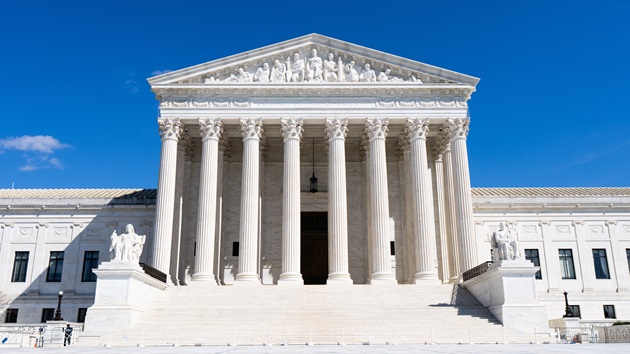
(WASHINGTON) -- The Supreme Court on Wednesday ruled that internet service providers cannot be held liable for illegal downloads of copyrighted material like music, movies, and TV shows simply because some of their customers are known to engage in piracy.
The unanimous decision reversed a $1.5 billion damages award to Sony Music Entertainment in a suit against Cox Communications, the third largest broadband provider in the U.S., in a setback for the entertainment industry's efforts to crack down on rampant, illicit distribution of copyrighted material online.
"Cox provided Internet service to its subscribers, but it did not intend for that service to be used to commit copyright infringement," wrote Justice Clarence Thomas in the court's opinion. "Holding Cox liable merely for failing to terminate Internet service to infringing accounts would expand secondary copyright liability beyond our precedents."
Copyright owners had insisted that the risk of being sued creates an incentive for internet service providers to help root out online piracy and suspend the accounts of those suspected of dealing in protected material.
The victory for Cox effectively blunts entertainment industry efforts to root out online piracy by leveraging service providers. It had warned that a contrary ruling could have forced them into bankruptcy and potentially eliminated internet access entirely in some communities.
Federal law makes it a crime to directly infringe on a copyright, but secondary liability by another party involved in copyright infringement -- such as internet service providers -- remains an evolving area of law.
As a general rule, anyone who "materially contributes to the infringing conduct of another may be held liable as a contributory infringer," lawyers for the Motion Picture Association of America (MPAA), an entertainment industry trade group, argued in a brief to the high court.
Thomas said the court rejects that view.
"The provider of a service is contributorily liable for the user's infringement only if it intended that the provided service be used for infringement," he wrote. "The intent required for contributory liability can be shown only if the party induced the infringement or the provided service is tailored to that infringement."
Nearly 19 billion downloads of pirated movies and TV shows were made using online peer-to-peer software in 2023, according to the MPAA. The copyright violations cost the U.S. economy more than $29 billion and "hundreds of thousands of jobs," the group estimates.
Justices Sonia Sotomayor and Ketanji Brown Jackson concurred in the judgment of the court but said they would not have imposed as stringent limits on liability.
"Instead of artificially limiting secondary liability, the Court should have examined whether some other rule of fault-based liability derived from the common law might hold Cox liable for copyright infringement committed on its network," Sotomayor wrote.