(WASHINGTON) -- As oil and gas prices soar amid Iran's stranglehold on the Strait of Hormuz, President Donald Trump and his top officials now appear to be suggesting it's not the U.S.'s problem to solve.
Trump on Tuesday again lashed out at allies for not getting involved in the conflict, and told them: "Go get your own oil!"
"All of those countries that can't get jet fuel because of the Strait of Hormuz, like the United Kingdom, which refused to get involved in the decapitation of Iran, I have a suggestion for you: Number 1, buy from the U.S., we have plenty, and Number 2, build up some delayed courage, go to the Strait, and just TAKE IT," the president wrote in a post on his social media platform.
"You'll have to start learning how to fight for yourself, the U.S.A. won't be there to help you anymore, just like you weren't there for us," Trump added.
Trump reiterated that sentiment in a phone call with ABC News Chief Washington Correspondent Jonathan Karl later Tuesday.
"I'm going to let the countries that want to buy oil, they can -- they can police it themselves. Why should I do it for them? They weren't there for me," Trump told ABC's Karl of the Strait of Hormuz.
The statements appear to be a far cry from Trump's threat to Iran from just days ago. On March 21, he wrote on social media that if Iran didn't "FULLY OPEN" the strait in 48 hours, the U.S. would hit the country's power plants. That deadline was extended twice after Trump said that negotiations were ongoing.
Defense Secretary Pete Hegseth on Tuesday echoed Trump in calling on countries around the world to "be prepared to step up."
"It's not just the United States Navy. Last time I checked, there was supposed to be a big, bad Royal Navy that could be prepared to do things like that as well," Hegseth said, referring to the United Kingdom's naval forces.
"President Trump's been willing to do the heavy lifting on behalf of the free world to address this threat of Iran," Hegseth said. "It's not just our problem set going forward, even though we have done the lion's share of preparation to ensure that that strait will be open, which is an outcome the president has been very clear on."
Prior to the war, more than 100 ships were passing through the Strait of Hormuz each day, according to data from U.N. Trade and Development. Now, just a handful of ships are estimated to be passing through on a daily basis amid Tehran's chokehold.
The result has been a record monthly spike in oil and gas prices. In the U.S., the average cost of a gallon of gas topped $4 on Tuesday for the first time since August 2022.
Yet, Trump administration officials have notably declined to list reopening the strait as a key objective of Operation Epic Fury.
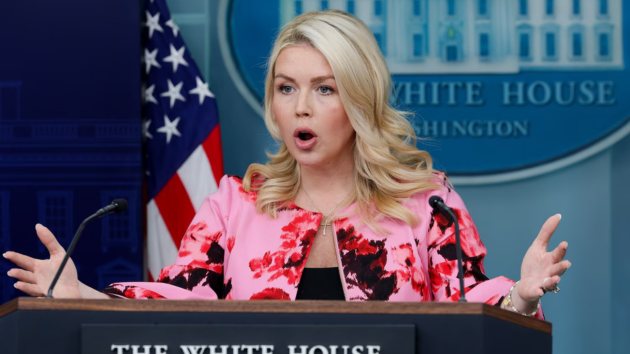
"The objectives of Operation Epic Fury are as follows: destroying the Iranian navy; destroying their ballistic missiles; dismantling their defense industrial infrastructure that produces those weapons that have long threatened the United States and our allies; and then, of course, preventing Iran from obtaining a nuclear weapon," White House press secretary Karoline Leavitt said during Monday's press briefing.
Leavitt was pressed by a reporter whether Trump can declare victory over Iran if passage through the strait remains as hampered as it is now.
"The full reopening of the strait is something the administration is working towards, but the core objectives of the operation have been clearly defined for the American people by the commander in chief," Leavitt replied.
Trump has said he long predicted Iran would use the strait as a weapon, and that he knew oil prices would go up if the U.S. attacked Iran. He has faced criticism for not vocalizing a clear strategy for reopening the waterway, where roughly one-fifth of the world's oil supply is caught in the crosshairs of the conflict.
Trump earlier this month issued a public request to U.S partners in Europe and Asia to help the U.S. secure the strait. Those countries largely rebuffed his call to send warships and other kinds of assistance. Some made clear this is not their war, while others have said they would get involved in the strait -- but only once hostilities end.
The cold shoulder prompted Trump to change his tune and declare, "We don't need any help, actually."
Trump then ramped up threats to attack Tehran's power and desalination plants if Iran doesn't reopen the strait.
"If for any reason a deal is not shortly reached, which it probably will be, and if the Hormuz Strait is not immediately 'Open for Business,' we will conclude our lovely 'stay' in Iran by blowing up and completely obliterating all of their Electric Generating Plants, Oil Wells and Kharg Island (and possibly all desalinization plants!)," Trump posted Monday.
Trump has paused attacks on Iran until April 6 citing ongoing negotiations with new Iranian leadership, though Tehran has publicly denied any direct talks and has pushed back on a 15-point peace plan presented by the U.S. through intermediaries.
Amid his renewed call on Tuesday for other nations to step up, Trump told CBS News he is not "yet" pulling U.S. assets from the Strait of Hormuz, but "at some point I will."
Later, in an interview with the New York Post, Trump said he believed the strait would "automatically open" when the U.S. exits the conflict.
"I don't think about it, to be honest," Trump told the New York Post. "My sole function was to make sure that they don't have a nuclear weapon. They're not going to have a nuclear weapon. When we leave, the strait will automatically open."
ABC News' Emily Chang contributed to this report.