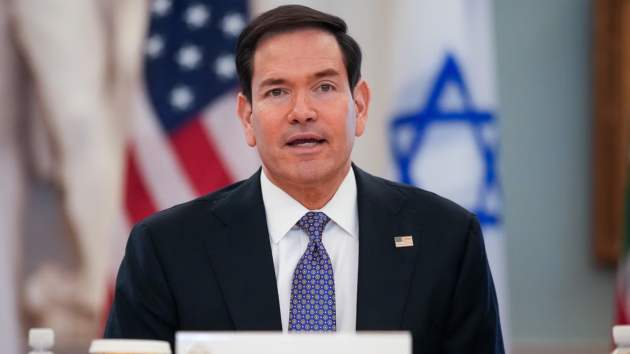
(WASHINGTON) -- Data collected by the State Department that has not previously been made public indicates that the number of people receiving treatment through the President's Emergency Plan for AIDS Relief (PEPFAR) has remained steady despite dramatic cuts to foreign aid funding under the Trump administration, according to an internal department memo sent to Secretary of State Marco Rubio and seen exclusively by ABC News.
The memo, which is marked sensitive but unclassified, says that even though overall spending on the initiative fell by roughly 30%, 20.6 million people living with HIV in more than 50 countries received anti-retroviral treatment through U.S. government programs during the 2025 fiscal year -- the same number government data shows were receiving the therapy in 2024.
However, the memo did not provide information on the number of individuals who had received testing and counseling services through PEPFAR, which was 84.1 million in 2024. Global health experts estimate that figure could have fallen by more than 15 million in 2025, due in part to an interruption to some testing programs during the Trump administration's freeze on most foreign aid in early 2025.
But Jeremy Lewin, the State Department's senior official for foreign and security assistance, reports that the data collected in 2025 shows progress towards other Trump administration goals, including ending mother-to-child transmission of HIV.
Lewin wrote to Rubio that the number of pregnant and breastfeeding mothers who began pre-exposure prophylaxis through PEPFAR more than doubled. He said it climbed from 43,000 in 2024 to 103,000 in 2025, " showing early progress on any early focus area of yours and President Trump's."
Additionally, Lewin said the 2025 data demonstrates "an important shift toward country self-reliance," indicating that treatment programs for 3 million people with HIV/AIDS were now being managed by national governments rather than organizations working on behalf of PEPFAR.
Lewin said the department expected to see "further progress" toward country self-reliance as it further shifts toward its new global health strategy based on bilateral agreements that mandate a level of co-investment from participating nations.
In a letter outlining the plan in September 2025, Rubio said that the U.S. would enter pacts with 71 countries by the end of the year and establish detailed implementation plans with those nations by the end of March 2026 -- a timeline the administration has fallen behind.
In his memo, Lewin said that as of April 7, the U.S had now "signed 30 compacts with nearly $20.6 billion dollars in both U.S. and partner co-investment commitments," adding that the current data "does not yet show the impact of these historic deals."
The Bureau of Global Health Security and Diplomacy will confidentially brief members of Congress on the 2025 PEPFAR data before releasing it to the public on Friday, according to the memo.
Since it was launched by former President George W. Bush in 2003, PEPFAR has saved 25 million lives globally, supported 7 million orphans and vulnerable children, and enabled 5.5 million babies to be born HIV-free, according to the State Department. It's credited as the largest commitment by any country to fight a single disease in history.