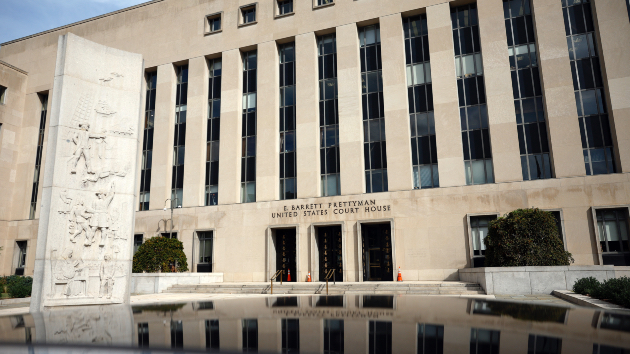
(WASHINGTON) -- A federal appeals court on Monday concluded that the Trump administration's transgender military ban is likely unconstitutional and "appears to be driven by the bare desire to harm a politically unpopular group."
In a 2-1 decision, the D.C. Circuit Court of Appeals affirmed a lower court's decision blocking the Department of Defense from removing current servicemembers because of their gender dysphoria.
"At this preliminary stage, I conclude that the Hegseth Policy is both arbitrary and based upon animus, and for those reasons the Policy violates Plaintiff-Appellees' constitutional right to equal protection of the law," wrote Judge Robert Wilkins, referring to Defense Secretary Pete Hegseth.
The decision only applies to the service members who sued the administration and does not bar the Pentagon from blocking transgender people from joining the military.
According to the court, prospective military members can seek relief after the case has completely moved through the courts, while active service members face a more serious hardship by being expelled from the military.
"For those servicemembers facing expulsion, it is not clear how easily they can be reinstated and made whole. But even if they can be reinstated after being separated, it appears to us to be a much greater hardship to end a military career than to delay the start of one," Judge Wilkins wrote.
Judge Justin Walker -- the sole judge on the panel appointed to the bench by a Republican president -- dissented and said members of the military could be deprived of certain rights guaranteed to the civilians.
"Like today's majority, I cherish those rights, and so I understand the impulse behind the majority's unprecedented intervention into military affairs. But because the plaintiffs are service members not civilians, and because we are judges not generals, I respectfully dissent," he wrote.
"We have neither the expertise nor the authority to decide whether the military can exclude the plaintiffs from its ranks. The Constitution assigns that authority to Congress and the Commander in Chief," he added.