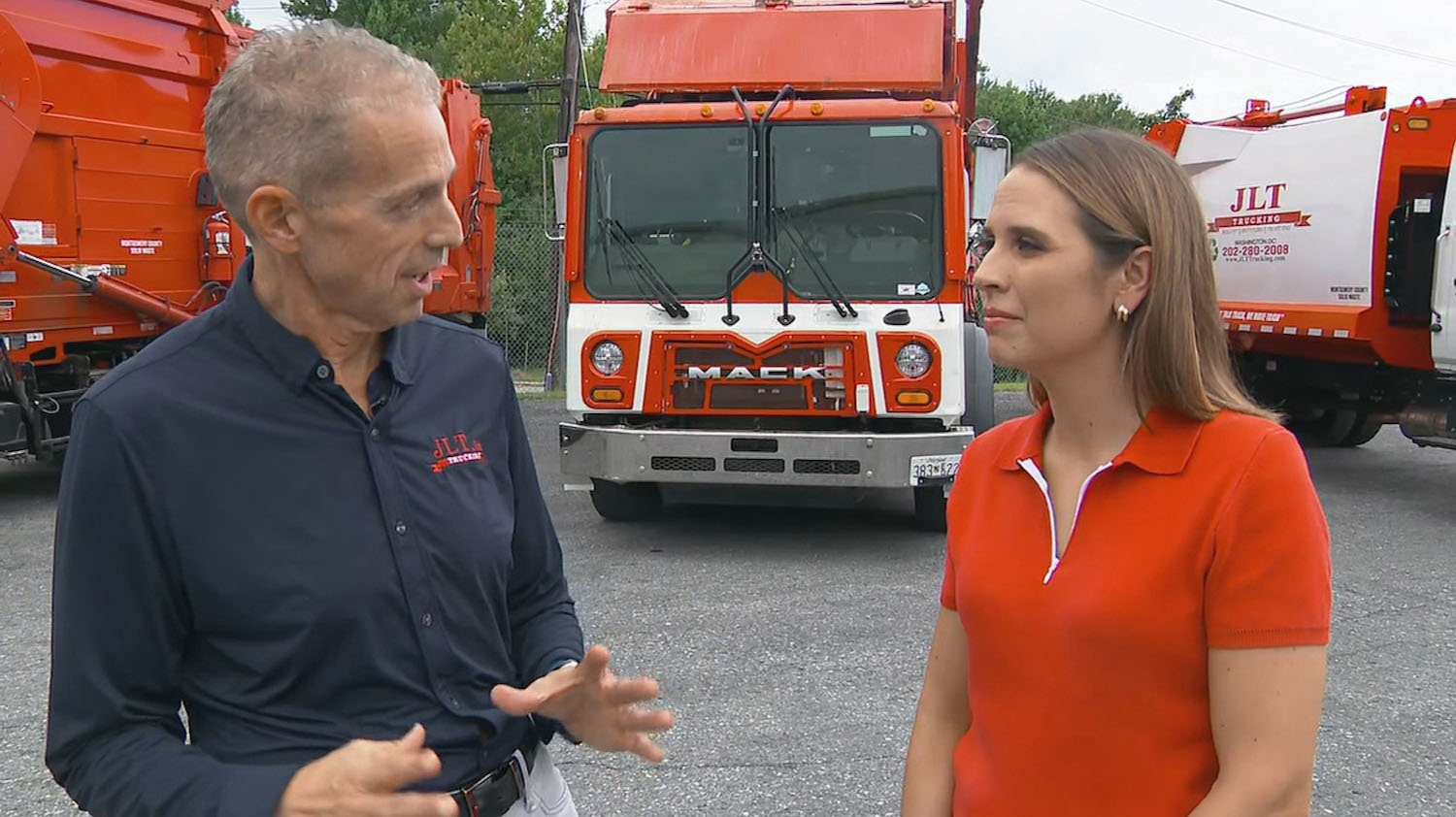
(WASHINGTON) -- One Washington, D.C.-area waste collection company says the long-term agreements it has made with its customers means it can't raise its rates fast enough to keep up with the rising cost of diesel fuel.
Marc Shaener, director of market development for JLT Trucking Inc., told ABC News' Elizabeth Schulze on Friday that rising diesel costs are costing the company $100,000 more per month for its fleet of more than 100 trucks.
"There's no relief in sight," Shaener said. "We can't sustain it any longer, period, in that it's going to detract from investment. It's going to take away from our employees. It's going to shrink business."
Diesel prices have risen nearly 60% since the war with Iran began almost seven months ago. The average price of diesel hit a record high on Monday at around $6.49 per gallon, according to GasBuddy. The national average price sat near $3.70 a year ago.
Diesel prices rose 30.7 cents over the last week, according to GasBuddy, boosted by the flareup in fighting between the Houthis and Saudi Arabia.
Vice President JD Vance told reporters today that the Navy is trying to push back against the Iranians "trying to terrorize international shipping."
"We're very cognizant of the fact that because the Iranians are terrorizing international shipping, energy prices are elevated," Vance said. "We're doing everything that we can to, one, try to clamp down on those prices, but give American people some relief in the interim."
President Donald Trump has previously pointed to Ukraine's attacks on energy infrastructure in Russia as driving up prices.
"Russia has unfortunately lost control of its Diesel Oil Industry due to its War with Ukraine," Trump posted on his social media platform on Monday. "A large number of their Diesel refineries have been blown up and are, at least temporarily, out of commission."
Shaener said his fleet burns about 2,000 gallons of diesel a day to collect waste and recyclables in the D.C. and Baltimore region. He said he'll now spend an extra $1.2 million a year on fuel.
"They rebounded so high and so fast that we can't even change pricing fast enough to account for that cost," Shaener said.
He said JLT can't increase its rates to keep up because its contracts usually adjust annually or every five years so it has been forced to absorb its higher costs.
Shaener said his business is an economic indicator.
"When things go down, trash is the first to feel it. And we're starting to feel it already," he said. "People have budgets to hit. They can't afford this, so they have to cut somewhere. They cut from the trash."
Shaener said he feels like JLT's employees and customers are political "pawns."
"We have to tell our customers. We have to tell our employees. We have to tell our investors why we can't do what we want, what we planned to do," he said. "Why is that? That's because someone somewhere is running a government that decided that they're going to impact our industrial fuel economy."